





By Mareta Gevorkyan
The global fashion industry has spent decades looking for the next great creative frontier. Paris, Milan, London, New York are capitals that have long defined what fashion means to the world, but they share a structural problem: industrialization interrupted their craft traditions. When luxury houses reclaim ‘artisanal’ methods today, they often reconstruct what was abandoned generations ago. The authenticity is performed and not inherited.
Armenia offers exactly what that search has been looking for: the rare convergence of uninterrupted craft knowledge, a generation of designers trained in both traditional techniques and contemporary conceptual thinking, and infrastructure that can finally connect this work to international audiences.
When Craft Memory Survives Disruption
Most European fashion capitals experienced the industrial revolution as rupture. Mechanization replaced hand techniques. Speed replaced patience. The guild system collapsed. By the time fashion houses wanted to reclaim “artisanal” methods in the late 20th century, they often had to reconstruct what had been lost.
Armenia’s trajectory was different. The country endured empires, displacement, and erasure, but the knowledge held. Embroidery techniques passed from generation to generation. Textile workers continued to train in systems that valued technical mastery. When Soviet-era factories closed, the seamstresses and tailors didn’t disappear. They kept working, often in small ateliers, preserving skills that elsewhere had been abandoned to efficiency.
Contemporary Armenian designers inherit this. They don’t need to romanticize or revive craft tradition. They learned from people who never stopped practicing it. Designers like Narek Jhangiran work with embroiderers who were trained in the same methods their grandmothers used, but apply those techniques to contemporary silhouettes. Varduhi Torozyan creates pieces where traditional textile patterns appear in unexpected contexts, transformed by construction methods she studied in modern design programs. Hayk Ananyan takes the same approach in luxury footwear: his shoes are handcrafted in Armenia by artisans who work with techniques passed down through generations, yet he channels those methods into bold, architecturally precise designs.
The garments carry cultural memory without being costume. They feel both ancient and current because they emerge from a continuous line of making, not a reconstructed one. And crucially, designers here don’t apologize for taking time. The result is garments that last and that feel made by someone who cared about getting it right.
Infrastructure That Finally Matches The Ambition
For years, Armenian designers created brilliant work that remained local. Not because it lacked quality, but because the platforms for designers to present their work alongside international names were limited.
That’s beginning to change. Maison Marom, an international lifestyle group of companies we founded in Armenia, was created to transform business into cultural heritage. We develop projects at the intersection of fashion, beauty, gastronomy, and cultural experience, each designed to elevate Armenian creativity on equal footing with international standards.
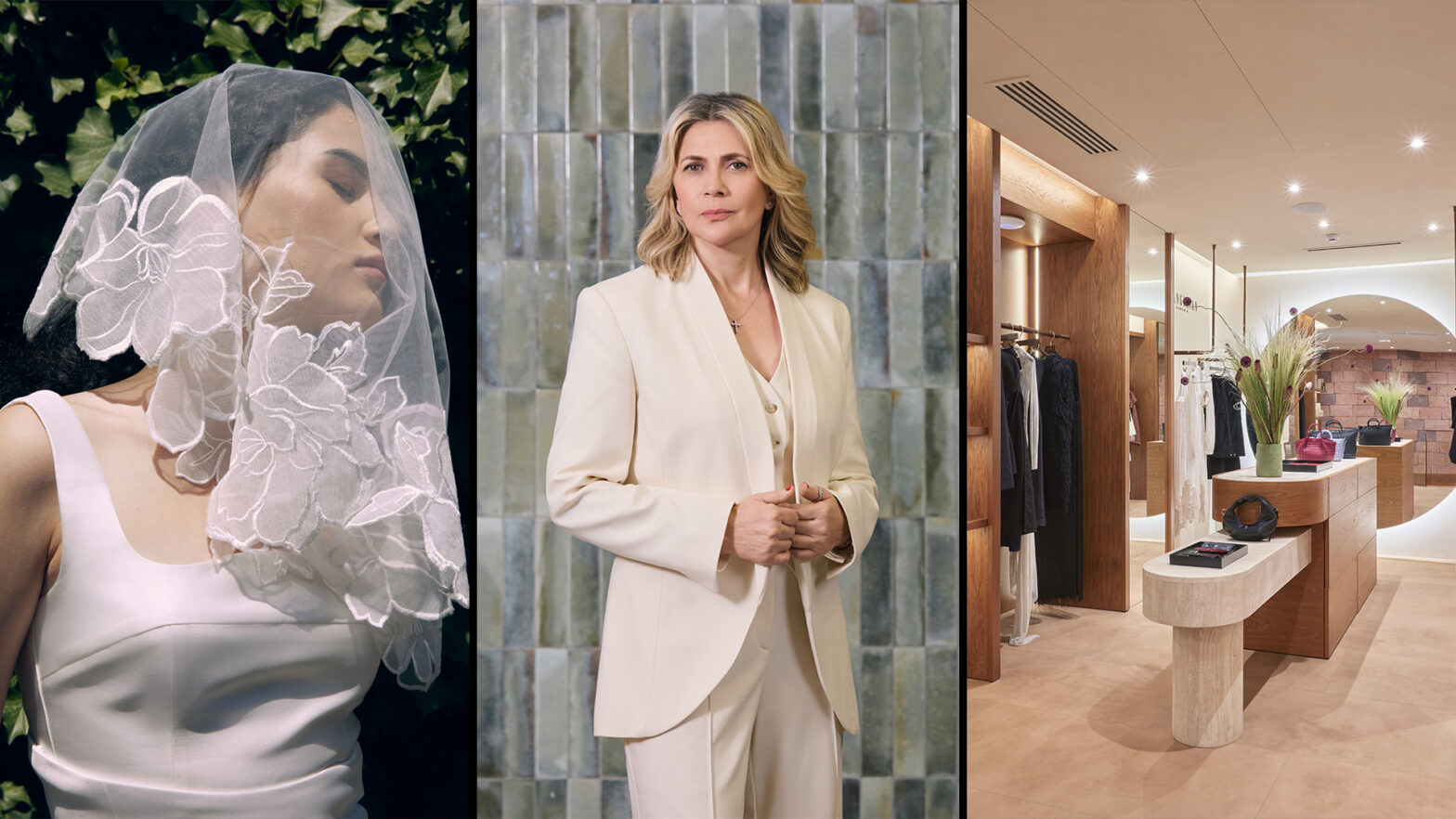
Rien-à-Porter, which opened this year in Yerevan under the Maison Marom umbrella, addresses that platform gap. As Armenia’s first concept-driven retail and cultural hub, it presents international luxury brands in the same space as emerging Armenian talent, such as Nensi Avetisian, Hayk Ananyan, and Nelly Tadevosyan. The e-commerce arm of the platform extends beyond Armenia. Now, a buyer in Paris or New York can access designers who were previously visible only to those who traveled to Yerevan.
Maróm Label, another initiative under Maison Marom, takes a different approach. Based in Paris, it brings in French professionals to collaborate directly with Armenia, including local historians, artists, and artisans. They spend months in Armenia, learning context, studying archives, working in studios alongside people who’ve spent their lives with these materials. The resulting collections emerge from genuine exchange, resulting in an outsider’s perspective meeting insider expertise.
Armenian designers no longer need to wait for external validation or hope to be “discovered.” They have channels they can control, standards they can set, and relationships they can build directly.
The Talent Returns And Stays
Part of why this moment feels different is the movement of people. Armenians who left, whether a generation ago or more recently, are returning. They bring capital, international networks, and a desire to contribute.
But the terms have changed. The Residency Principle, a philosophy emerging across several initiatives, insists on commitment. If you’re going to operate in Armenia, you stay. You invest time in understanding context. You train the next generation. You build something that outlasts your own involvement.
MOMENT OF WHITE demonstrates this principle in practice. Designer Alena Konnova moved permanently to Armenia and built her team with local artisans, sharing her standards through years of direct collaboration.
The principle extends beyond individual brands. Through Green Rock Foundation, we support the Hovhannes Sharambeyan Museum of Folk Arts in Dilijan, where masters who preserved traditional craft knowledge now train the next generation, ensuring the uninterrupted line of making continues.
The result is an ecosystem strengthened by outside knowledge rather than depleted by it.
What Fashion Needs That Armenia Provides
The fashion world talks constantly about sustainability, about craft, about authenticity. Armenia demonstrates what those values look like when they’re lived rather than marketed.
Designers here work within systems that never fully industrialized and where hand techniques remained economically viable because they never stopped being culturally valued. They were trained by people for whom craft was the baseline, not the luxury add-on.
And they aren’t selling authenticity as a brand position. They’re making work that emerges from their own cultural context, carrying information about survival, celebration, and identity.
For the global fashion industry, Armenian fashion offers a model of what happens when craft tradition remains unbroken, when quality isn’t sacrificed to speed, and when designers have something real to draw from.
Paying attention to Armenia is imperative because the work is excellent, the designers are serious, and the infrastructure exists to connect them to international audiences. Armenian fashion has been here all along. The difference now is that the platforms, the networks, and the conditions have aligned to let the world finally see what’s been made.