






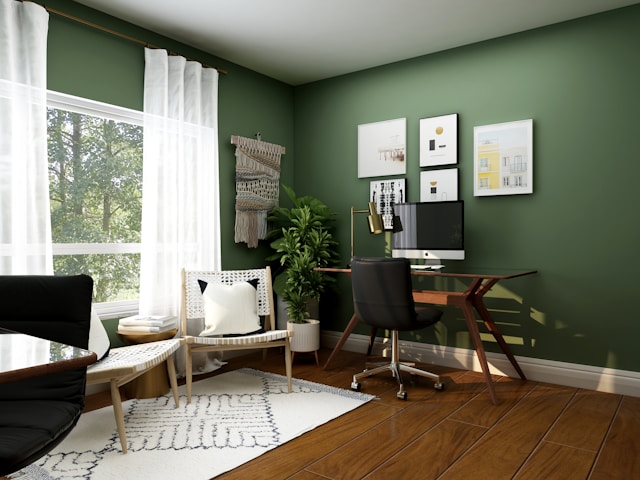
If your desk is constantly buried under papers, cables, and half-finished mugs of coffee, you’re not just dealing with clutter – you’re dealing with visual stress. Your environment has a huge impact on how you feel, focus, and show up every day.
A minimalist workspace isn’t about having an empty desk for the sake of aesthetics. It’s about creating a calm, intentional space that supports your brain, your schedule, and your wellbeing.
Let’s break down how to build a minimalist workspace that actually makes life feel lighter.
1. Start by Decluttering with Purpose
Minimalism isn’t just “throw everything away.” It’s about keeping what earns its place.
- Clear everything off your desk.
- Put back only what you use daily: laptop, notebook, pen, maybe a lamp.
- Give every other item a “home” – a drawer, a box, a shelf.
If something doesn’t have a home, it becomes clutter. Be honest: are you using it, or just feeling guilty about throwing it out?
2. Design for Calm, Not Chaos
Once you’ve decluttered, think about how your space feels.
- Light: Natural light is ideal, but even a warm desk lamp can soften the mood.
- Colour: Neutral tones and a simple colour palette are easier on the eyes than a riot of colours.
- Layout: Keep frequently used items within arm’s reach so you’re not constantly hunting around.
A good rule: if your eyes don’t know where to rest, your brain doesn’t either.
3. Tame the Tech (and the Cables)
Digital clutter is just as stressful as physical clutter.
- Use a cable tidy, clips, or a cable box to hide messy wires.
- Keep only the devices you need on your desk.
- Set aside 10 minutes each week to clean your desktop – both physical and digital.
Close unused browser tabs, organise files into folders, and unsubscribe from unnecessary email noise. Your future self will be very grateful.
4. Add Personality Without Adding Clutter
Minimalist doesn’t mean personality-free. It just means intentional.
Choose a few items that genuinely make you smile or feel motivated; a small plant, a framed photo, a favourite notebook. One or two well-chosen pieces can say more than ten random trinkets.
This is also where small details can elevate your space and your brand. For example, how personalised business cards can add a stylish, professional touch without taking up much room – they’re functional, compact, and subtly showcase who you are.
5. Protect Your Space with Simple Rituals
A minimalist workspace won’t stay that way by accident. Build tiny habits that keep it calm:
- End each day with a two-minute tidy.
- Put mugs in the kitchen, not on permanent desk display.
- Do a monthly “reset” where you reassess what’s crept back in.
These micro-rituals turn your workspace into a daily reset button instead of a stress trigger.
In Conclusion
A minimalist workspace isn’t about perfection or Pinterest-worthy photos. It’s about creating a space that supports a stress-free lifestyle: fewer distractions, more focus, and a calmer mind.
Clear the noise, keep what matters, and let your desk become a place that helps you breathe a little easier every time you sit down.