






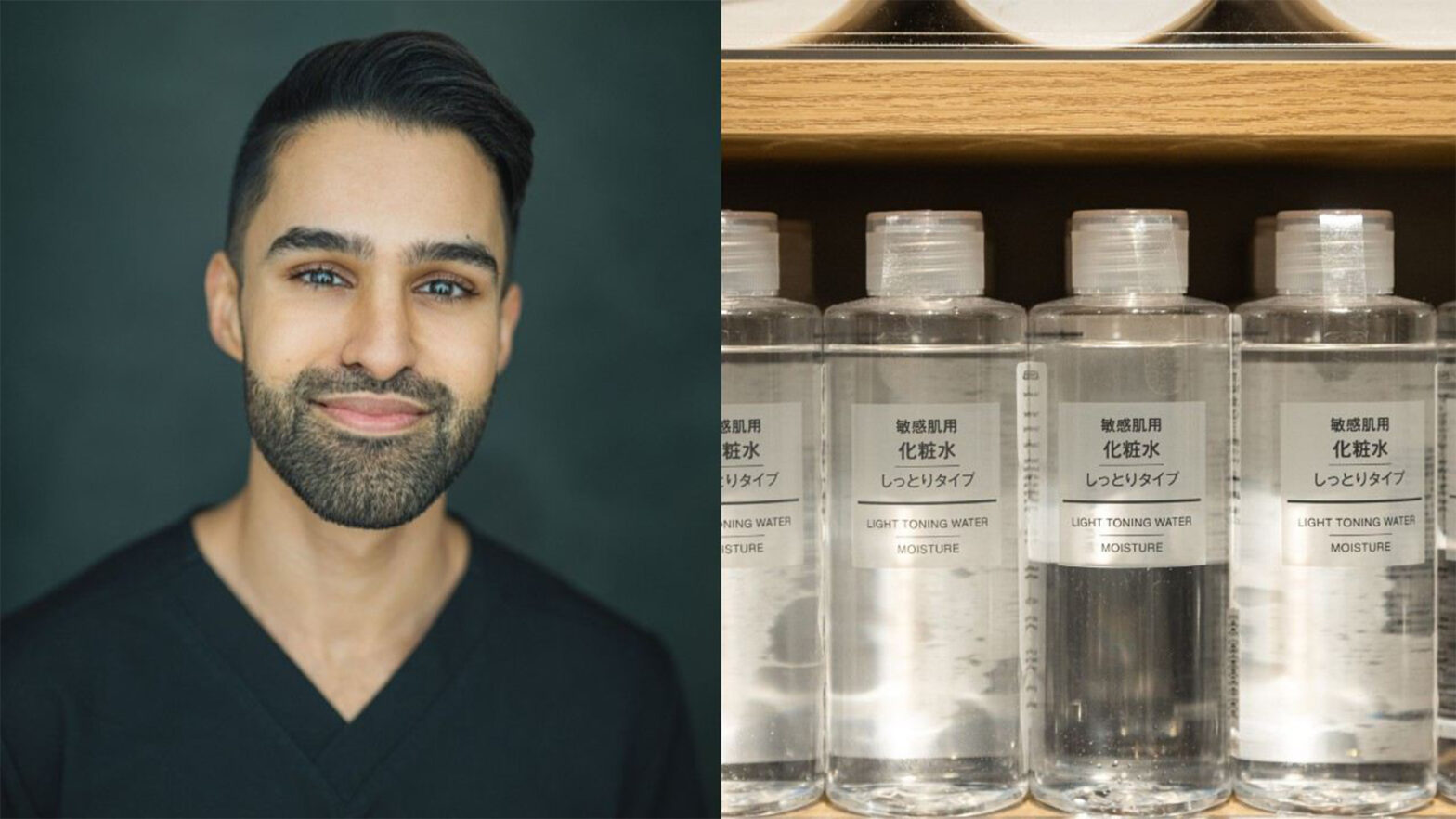
Skincare has spent years telling consumers to add more. More actives, more steps and more powerful ingredients have become the norm, particularly as trends move quickly across social media. While K-Beauty has become known for rapid innovation and evolving formulations, J-Beauty takes a noticeably different approach. Instead of always looking for the next breakthrough ingredient, Japanese skincare places greater emphasis on perfecting the foundations of healthy skin. But what are the core principles behind J-Beauty, and is this an approach worth trying? We spoke to Medical Aesthetics Doctor and Founder of Harley Street’s Hannah London Clinic, Dr Kaywaan Khan, to find out.
1. What is J-Beauty and why do you think it is gaining fresh attention?
J-Beauty, or Japanese beauty, refers to skincare rooted in Japanese beauty traditions, where the emphasis is less on constantly introducing the newest ingredient and more on perfecting the fundamentals. From cleansing without unnecessarily stripping the skin to protecting from cumulative UV damage, the approach is built around getting the essentials right.
That philosophy has developed over decades, with skincare treated as something to maintain carefully over time, rather than continually adjust in response to every new concern. There is a strong emphasis on prevention, with the idea that keeping the skin functioning well can be just as important as trying to correct problems later.
That is one reason J-Beauty feels especially relevant now. Over the last few years, consumers have been exposed to a growing number of powerful active ingredients. Exfoliating acids became routine for many people, while retinoids moved from specialist skincare into everyday bathroom cabinets. At the same time, rapidly changing trends have encouraged people to add more products to their routines.
Used appropriately and within the right routine, these ingredients can be incredibly effective. The problem arises when too many products are introduced at once, or when the skin is continually pushed to tolerate more. For many people, that has resulted in over-treatment and persistent sensitivity.
Therefore, it makes sense that more attention is now being placed on maintaining the condition of the skin, rather than doing more to it. The outermost layer of the skin, known as the stratum corneum, plays an essential role in limiting water loss while helping protect the skin from external stressors. When that barrier becomes compromised, the skin can become increasingly reactive, sometimes to products that were previously well tolerated.
This is where the J-Beauty philosophy becomes particularly relevant from a medical aesthetics perspective. If the skin is already irritated, adding more intensive products is unlikely to be the answer. Healthy skin should come first, with aesthetic treatment building on that foundation rather than working against it.
2. How does it differ from K-Beauty?
K-Beauty moves quickly with innovation and regularly introduces new textures or ingredients to the market. It is also very good at taking ideas from dermatology and aesthetic medicine and turning them into products that feel accessible to everyday consumers. That sense of constant innovation is one of the reasons K-Beauty has become such a global phenomenon.
J-Beauty traditionally feels quieter and more restrained. Rather than continually expanding the number of steps within a routine, there is often more focus on refining established skincare categories. This might mean improving the level of protection offered by a sunscreen or carefully balancing humectants within a moisturiser. The emphasis is on making the fundamentals work exceptionally well.
It is not that Japanese skincare lacks technology. In fact, it’s quite the opposite. DECORTÉ, for example, has developed sophisticated multilamellar liposome technology within its Liposome Advanced Repair range. The difference is that the technology is often incorporated into a familiar everyday product, rather than being presented primarily as the newest breakthrough ingredient consumers need to try.
A simple way to distinguish the two is that K-Beauty often asks, “What can we introduce next?” while J-Beauty is more likely to ask, “How can we make this essential step work better?” Neither approach is necessarily better. What matters clinically is whether the products you use serve a clear purpose and are appropriate for your skin type. There is no need to keep adding to your routine simply because something new becomes popular. Every part of a skincare routine should have a reason for being there.
3. Is J-Beauty suitable for all skin types?
The philosophy behind J-Beauty can be suitable for almost everybody, but individual products still need to be chosen according to the patient’s skin type.
Someone with dry or compromised skin may benefit from J-Beauty’s approach, as it places greater emphasis on restoring moisture before introducing more intensive ingredients. Curél Intensive Moisture Facial Cream is a good example of how J-Beauty can take something as simple as moisturising the skin and make it considerably more sophisticated. The formulation is built around ceramide care, drawing on the role these lipids play in helping the skin retain water and function effectively. In doing so, an everyday skincare step becomes a more targeted way of supporting compromised skin.
Having said that, I would never say that a product is suitable simply because it is Japanese or Korean. Someone with rosacea may need a very different approach from somebody managing acne. Eczema can change what the skin will tolerate, whilst hyperpigmentation may require more targeted ingredients that go beyond a purely restorative routine.
This is why I see J-Beauty principles as a useful starting point, rather than a routine that should be followed rigidly. The priority is to keep the skin comfortable and functioning well before asking it to tolerate more. That means cleansing without leaving it stripped, maintaining hydration and giving a compromised barrier time to recover before introducing stronger actives. That is a much healthier starting point than building a routine around ten different trending ingredients.
UV protection is one principle I would carry across almost universally, and Japanese sunscreens deserve particular recognition here. Shiseido ANESSA Perfect UV Skincare Milk SPF50+ PA++++ is a good example of the Japanese emphasis on combining very high protection with a formulation that still feels elegant and wearable on the skin. That matters because even excellent sun protection has limited value if the formulation is unpleasant enough that someone avoids using it consistently.
Ultimately, J-Beauty is not about prescribing a fixed routine. Its more useful lesson is to consider what the skin needs before deciding what to put on it or how much to do to it. That is a principle that can apply to almost anyone, regardless of skin type.