





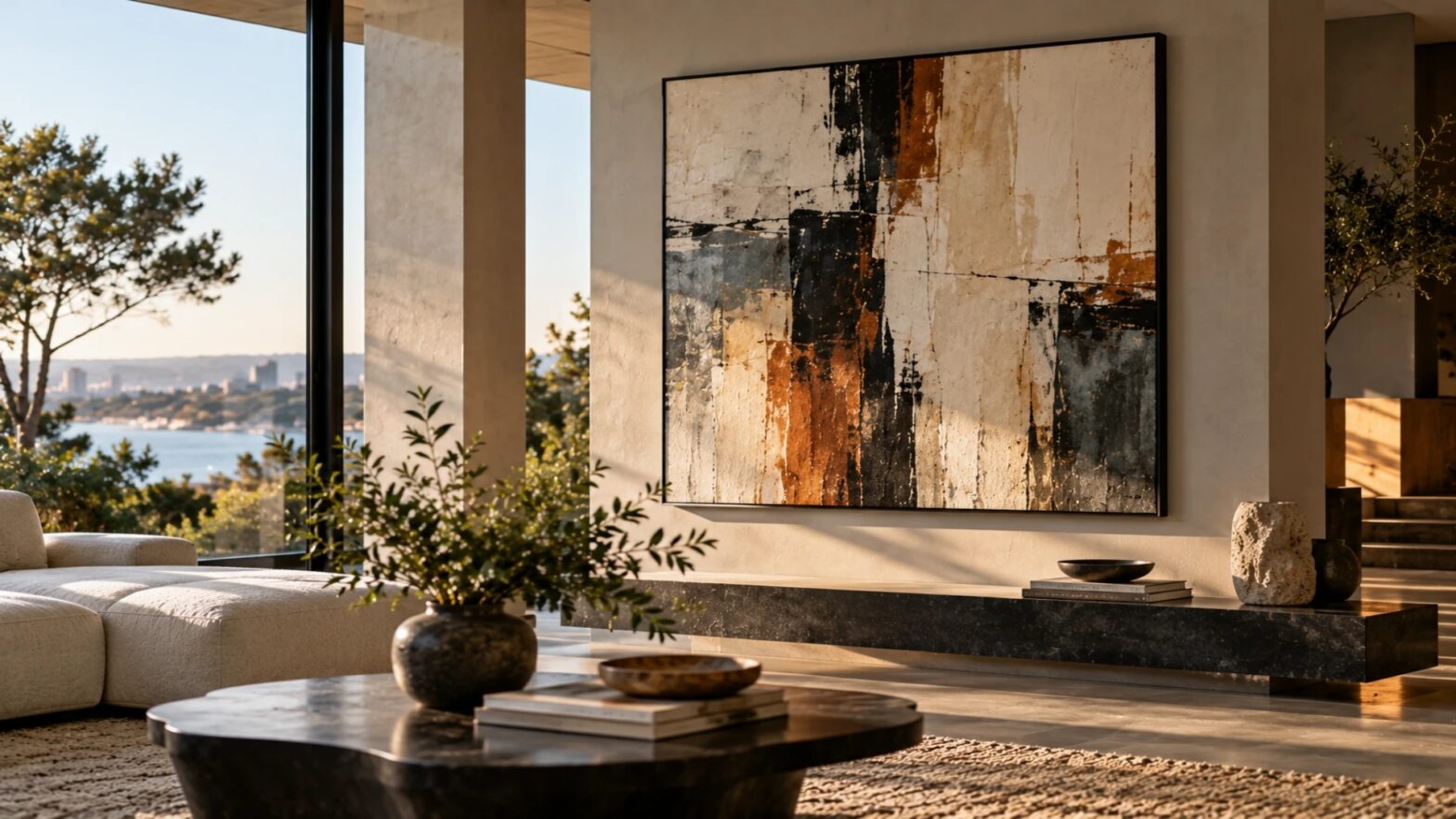
Luxury is often associated with rarity, craftsmanship and individuality. For people who appreciate these qualities, art can offer something that many conventional luxury purchases cannot: a lasting form of personal expression. Among the many artistic styles available today, original abstract art has become an increasingly interesting choice for collectors who want to bring character and individuality into their surroundings.
Abstract art does not rely on a recognisable landscape, portrait or object. Instead, it communicates through colour, shape, texture, movement and composition. This gives viewers the freedom to develop their own interpretation of a work, which is one of the reasons abstract pieces can become highly personal additions to a private collection.
What Makes Abstract Art Different?
Traditional representational art often gives the viewer a clear subject to identify. A portrait presents a person, a landscape presents a place, and a still life presents a collection of objects. Abstract art takes a different approach. It may suggest movement, atmosphere or emotion without explaining exactly what the viewer should see.
This openness is an important part of its appeal. Two people can look at the same painting and notice completely different elements. One person may respond to its colour palette, while another may focus on its texture or geometric structure. There is no requirement to arrive at one fixed interpretation.
For collectors, this can make an abstract work particularly meaningful. Its value is not limited to what it represents. It can become connected to a particular period of life, a personal memory or simply an emotional response that develops over time.
Original Art and the Appeal of Individuality
Luxury is increasingly connected with individuality rather than simply displaying expensive possessions. A carefully chosen artwork can reflect personal taste in a way that mass-produced decorative objects cannot.
An original work also carries a sense of uniqueness. Even when an artist creates works within a recognisable style, each original painting has its own combination of marks, layers, colours and details. Small variations in texture or brushwork can become part of what makes a particular piece distinctive.
This is especially relevant for people who want their collections to feel personal rather than assembled according to a predetermined trend. Instead of asking whether a painting is fashionable, a collector can consider whether the work creates a genuine connection.
How to Choose an Abstract Artwork
Selecting abstract art can initially feel more complicated than choosing a work with an obvious subject. There is no single image or scene to evaluate, so the decision often comes down to the relationship between the viewer and the artwork.
Several questions can help make the process more deliberate:
- Does the artwork create an immediate emotional or visual response?
- Do the colours and composition remain interesting after spending more time with the work?
- Does the piece have qualities that feel distinctive rather than simply following a current trend?
- Can you imagine continuing to appreciate the artwork as your tastes and surroundings change?
- Does the artwork have enough presence to stand on its own without overwhelming the space around it?
These questions do not create a formula for choosing art. Taste remains highly individual, and that is part of the experience of collecting. They simply encourage a more considered decision instead of choosing a piece because it happens to match a particular colour scheme.
Colour, Texture and Composition
When looking at abstract art, colour is often the first characteristic that attracts attention. However, it is worth looking beyond the initial palette. The relationship between colours, the direction of lines, the balance of empty and filled areas, and the texture of the surface can all influence how a work is perceived.
A restrained composition can create a sense of calm, while energetic marks and strong contrasts may produce a more dynamic impression. Layered surfaces can add depth, allowing different details to become visible as the viewer spends more time with the piece.
This is one reason original works can be particularly rewarding. Physical texture and subtle details are often difficult to appreciate fully through a screen. Seeing a work in person can reveal qualities that are not immediately obvious in a digital image.
Art as Part of a Personal Lifestyle
A private art collection does not have to follow one strict artistic direction. Collectors can bring together different periods, techniques, colours and approaches according to their own interests. The result can be more reflective of a person’s personality than a collection assembled around a single trend.
Art can also become connected with important experiences. A painting purchased during a memorable trip, discovered at a particular stage of life or selected after meeting an artist can carry a meaning that goes beyond its visual appearance.
For this reason, art can occupy a distinctive position within a luxury lifestyle. Unlike many objects that are purchased primarily for their function, a painting can continue to evolve in meaning as its owner changes and new experiences accumulate.
Why Trends Should Not Be the Only Consideration
The art market, like fashion and interior design, has its trends. Certain colours, formats and artistic approaches may receive greater attention at particular moments. Trends can be useful for discovering new artists and understanding what is happening within the creative world, but they do not necessarily determine whether a work will remain meaningful to an individual collector.
A painting chosen solely because it is currently popular may eventually feel less relevant when tastes change. A work that creates a genuine personal response has a different relationship with its owner. It can remain part of a collection because of what it represents to that person, rather than because it reflects a particular moment in the market.
This is particularly important when buying original art as a significant personal purchase. Taking time to look at different artists, techniques and compositions can make the experience more rewarding and help the collector understand what genuinely appeals to them.
Creating a Collection With Character
A meaningful collection does not necessarily need to contain a large number of works. A few carefully selected pieces can have more personal significance than a crowded collection assembled without a clear connection.
Collectors can also allow their preferences to develop naturally. An initial interest in colourful abstract compositions may eventually lead to an appreciation of monochromatic works, mixed media, geometric abstraction or more expressive painting techniques. There is no requirement for a collection to remain visually identical.
Over time, these choices can create a visual record of changing interests and experiences. Each work becomes part of a larger story, while still maintaining its own identity.
The Lasting Value of Choosing What You Truly Appreciate
The appeal of original abstract art ultimately comes from its ability to combine visual impact with personal interpretation. It does not tell the viewer exactly what to think or see. Instead, it leaves room for curiosity, emotion and individual response.
For modern collectors, this makes abstract art more than an aesthetic addition. A carefully chosen original can become part of a personal environment, a conversation piece and a reminder of a particular moment or feeling.
Luxury has always involved more than material value. It can also mean having the freedom to surround yourself with things that reflect your own taste and interests. In this context, choosing an original artwork is not simply about filling an empty wall. It is about finding a piece that continues to offer something to its owner long after the initial purchase.