






The tiny house movement has come a long way from its origins as a niche alternative to conventional housing. Today, these compact homes are increasingly associated with design, comfort and a closer connection to nature. Yet while many tiny houses may look similar at first glance, the experience of living in them can be very different.
Just as not every hotel offers the same level of comfort despite having a bed and a bathroom, not every tiny house delivers the same standard of living. The difference often lies not in size, but in the countless design, engineering and material choices hidden beneath the surface.
So what separates a thoughtfully designed tiny house from a standard one? From architect-led layouts and thoughtfully integrated technology to superior comfort and the freedom to stay in extraordinary locations, here are four features that define a truly elevated tiny house experience.
Space is created, not measured
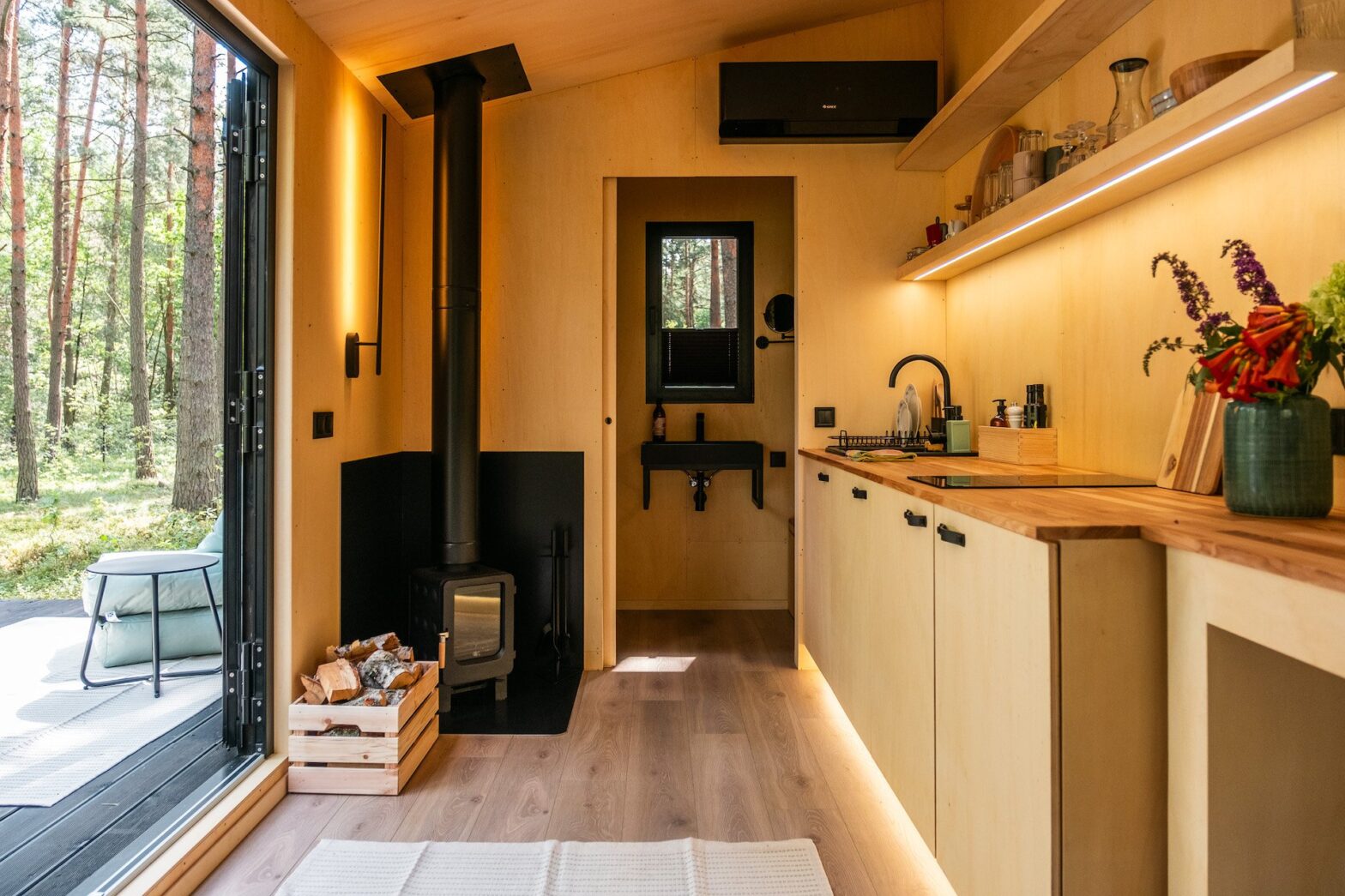
One of the biggest misconceptions about tiny houses is that comfort depends primarily on square metres. In reality, higher-end tiny houses often feel surprisingly spacious not because they are larger, but because they are designed more intelligently.
The difference usually becomes apparent in everyday use. In a standard tiny house, poorly planned storage, bulky furniture or awkward layouts can make the interior feel cramped. In a superior model, every element is carefully considered to maximise both functionality and the feeling of openness.
“In many tiny houses, valuable space is lost to design ideas that look clever but add little to everyday living. The most successful retreats take a more disciplined approach: every element earns its place. Storage integrated into seating, staircases and custom furniture keeps the interior uncluttered and adaptable, enhancing both comfort and usability. As renowned architect Peter Zumthor has observed, good architecture should support life rather than draw attention to itself. In a compact home, this principle transforms limited square metres into spaces that feel calm, practical and unexpectedly spacious,” says Krystyna Filipiak, architect at REDUKT Tiny Houses, a Polish manufacturer of mobile mini homes.
Technology that simplifies life
The most sophisticated technology is often the technology you barely notice. In a carefully crafted tiny house, smart features are not added to impress. They are there to make everyday living more comfortable, intuitive and reliable.
Heating, lighting and access systems can often be controlled remotely, allowing owners to prepare the house before arrival or adjust settings without interrupting their time away. Just as importantly, many top-tier manufacturers integrate technical solutions that remain largely invisible to the user. Protection against frozen pipes, dedicated technical spaces and intelligent monitoring systems may not be glamorous features, but they contribute significantly to comfort and peace of mind.
This reflects a broader trend in luxury design. Increasingly, people value products that remove friction rather than add complexity. The goal is not to fill a home with gadgets, but to create an environment that quietly works in the background.
When technology is implemented thoughtfully, it disappears from attention altogether. What remains is simply a more effortless living experience.
Comfort comes from invisible details
Luxury is often associated with what we can immediately see: beautiful materials, elegant interiors or carefully curated aesthetics. Yet in a tiny house, some of the most important contributors to comfort are hidden from view. That is why anyone considering a purchase should question manufacturers not only about finishes, but also about the technical details behind them.
Insulation, ventilation, acoustics and climate control have a far greater impact on everyday living than many people realise. A well-engineered tiny house remains comfortable during hot summers and cold winters, maintains healthy air quality and provides a sense of calm that is difficult to quantify but easy to appreciate.
The same principle applies to construction quality. Better materials, carefully executed details and robust technical solutions may not attract attention during a showroom visit, but they become invaluable over years of use. Doors close properly, surfaces withstand daily wear and the home simply functions as intended.
In many ways, this is what separates a thoughtfully designed tiny house from an ordinary one. The difference is not always visible at first glance, but it is felt every single day.
The freedom to stay in exceptional places
For many people, the greatest appeal of a tiny house is not the house itself, but where it allows them to live. A conventional holiday home often requires access to infrastructure and extensive preparation. A well-designed tiny house offers far greater flexibility.
Increasingly, homeowners are looking for places that provide privacy, tranquillity and a stronger connection with nature. Forest clearings, lakeside plots, mountain valleys or secluded countryside locations all become more accessible when a home is designed to operate with a degree of independence.
This is where features such as off-grid readiness, energy autonomy and efficient water management become especially valuable. They expand the range of locations where a tiny house can be placed while reducing reliance on existing infrastructure.
In a world where uninterrupted time and personal space have become increasingly scarce, the ability to wake up surrounded by nature may be one of the most desirable luxuries of all.
Luxury in compact form
A truly refined tiny house is not defined by size alone. It is shaped by intelligent design, discreet technology, hidden technical quality and the freedom to live closer to nature without sacrificing comfort. When these elements come together, a tiny house becomes more than a compact home. It becomes a carefully considered way of living.