


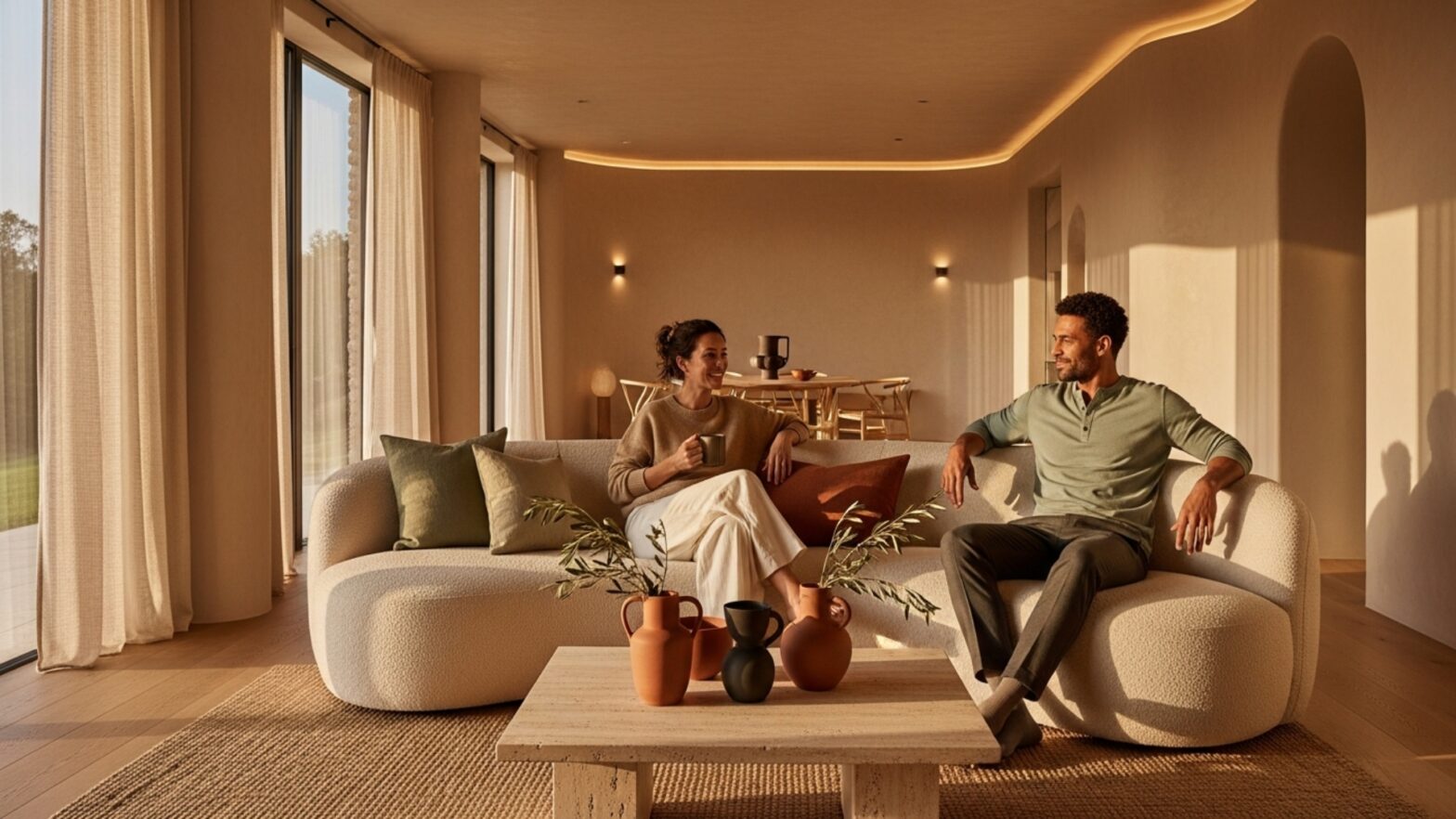
The era of sterile white and “millennial gray” interiors is fading. According to Yelp’s 2026 Home Trend Report, luxury buyers and developers are pivoting toward “warm minimalism” (or “midmalism”)—a design shift favoring psychological comfort, texture, and personality over rigid, cold perfection.
This is more than a passing trend; homeowners are demanding character, driving a 70% surge in custom upholstery and a 450% spike in wallpaper requests. Recognising that buyers value calm paired with authenticity, developers are heavily investing in this movement. Backed by a personalised home decor market projected to hit $330.6 billion by 2034, midmalism is set to shape upper-tier developments for years to come.
How Traditional Minimalism Lost Its Appeal
The All-White Aesthetic Is Fading
The all-neutral living room was once shorthand for contemporary luxury. Not anymore. UK design experts Lewis Janes and Karine Matte now call it an aesthetic mistake that leaves spaces feeling cold and anonymous. And they’re not alone in that assessment.
Matching furniture sets from identical retailers, generic black-and-white photography on the walls; it all looks flat and overused. In fact, 30% of interior designers report that the all-white kitchen will be the most regretted design choice among clients by 2027.
The message is clear. Property owners don’t want blank boxes designed to appeal to everyone. They want functional layouts that reflect who they actually are.
The Rise of Psychological Design
Beyond color preferences, measurable psychological benefits are shaping how luxury interiors get planned. The expanding concept of “slow living” calls for spaces curated to reduce physical clutter while engaging the senses in a calming way.
Modern minimalist homes use utility-driven design to create boundaries between high-stress work environments and domestic life. The focus is on mental clarity, everyday comfort, and emotional regulation rather than strict aesthetic discipline. Sound idealistic? The science says otherwise. One study found that people in wooden indoor spaces reported significantly less stress and fatigue than those in non-wooden environments.
By prioritising authentic materials and eliminating visual chaos, the warm minimalist approach turns homes into active contributors to long-term mental health and productivity.
Materials and Colors That Define Warm Minimalism
Earth Tones Take Over
Warm minimalism in 2026 is defined by richer, warmer earth tones over cool grays and basic beiges. Designers are using “color drenching” to add depth without clutter. Over 90% of experts correctly predicted brown would replace gray as the preferred neutral, using muted terracottas and deep ochres to create a grounding atmosphere.
Natural Materials and Sustainable Textures
Warm minimalism relies on organic materials like natural wood, textured stone, and woven textiles that age beautifully. High-end developers are prioritising these over synthetics for their superior durability and timeless aesthetic.
This shift aligns with major market trends:
- Millennial Demand: 75% of millennials will pay a premium for eco-friendly interior designs (PwC).
- Value Driver: Sustainability heavily influences real estate valuation.
- Biophilic Design: 60% of design experts use tactile, natural textures in luxury homes to boost comfort and property value.
| FeatureTraditional MinimalismWarm Minimalism (2026) | ||
| Primary palette | Stark whites, cool grays, high contrast | Earthy browns, warm beiges, muted terracottas |
| Material focus | Chrome, glass, glossy synthetics | Natural woods, textured stone, matte finishes |
| Lighting strategy | Bright, uniform overhead lighting | Layered, warm ambient and task lighting |
| Psychological impact | Clinical, disciplined, austere | Calming, adaptable, “slow living” focused |
Structuring a Cohesive Space
Modern design prioritises spatial efficiency and elevated style through adaptable layouts, modular installations, and multi-functional furniture. This balances open, shared areas with quiet, private zones.
To achieve a warm, minimalist standard, prioritise these structural elements:
- Built-in joinery: Maximises storage while keeping sightlines clean.
- Layered lighting: Replaces basic overhead fixtures for better ambiance.
- Tactile textiles: Uses woven linens and custom upholstery to add warmth.
- Subtle greenery: Complements and softens neutral color palettes.
Putting Warm Minimalism Into Practice
Mixing Vintage with Modern
One of the most effective moves in the midmalist playbook? Combining vintage or professionally restored furniture with contemporary, earthy architecture. Interior designers point out that this mix prevents rooms from looking like sterile showroom floors.
Property owners are sourcing high-quality pieces from estate sales and antique dealers, then investing in professional restorations. The result is a personalised footprint that standard retail purchases simply can’t replicate. Pairing these older, well-crafted items with modern layouts bridges historical craftsmanship and contemporary functionality in a way that feels genuinely lived-in.
Knowing Your Aesthetic First
Here’s where many homeowners stumble. The biggest barrier to pulling off high-end warm minimalism is misidentifying your baseline aesthetic before committing to expensive renovations. To curate a calming, personalised space, you first need to understand how warm minimalist principles intersect with your existing tastes.
A home can successfully blend minimal, earthy elements with varied design traditions, whether your preference leans toward Boho, Transitional, Traditional, or Craftsman. But getting that mix wrong leads to disjointed interiors that hurt both visual appeal and functional flow.
Objective assessment tools can help bridge the gap. The Dara Agruss Design Quiz, for example, lets you find your own design style through expert-curated visual comparisons covering everything from entryways to custom fireplaces. That kind of structured evaluation helps you pinpoint exactly which warm, tactile elements fit your lifestyle and floor plan.
Getting clarity upfront minimises costly design errors during renovation. It takes the guesswork out of material and color selection, so the transition from outdated gray to sophisticated warm minimalism stays visually cohesive and structurally sound.
The Long-Term Value of Intentional Design
Warm minimalism dominates luxury interiors right now because it balances clean lines with a genuine need for comfort and authenticity. As buyer preferences shift away from austere, all-white environments, high-end property values are increasingly tied to spaces that showcase architectural character and functional adaptability.
Investing in natural materials, layered lighting, and personalised modular layouts yields a stronger return in long-term satisfaction and aesthetic longevity. Properties built around these authentic, well-crafted design principles are well-positioned in the competitive 2026 market.