







What Fortune 100 Brands Get Wrong About Their China-to-USA Supply Chain, According to The Massing Group
75% of companies that pulled sourcing out of China in the past year moved it to another low-cost Asian country instead of the United States. Just 20% even considered domestic manufacturing, according to Kearney’s Reshoring Index. Apparel made domestically still accounts for roughly 3% of what Americans buy, a figure that has barely moved despite years of rising tariffs.
Against that backdrop, large brands are still opening conversations with domestic manufacturers. Benjamin Massing, founder of The Massing Group, has had enough of those conversations with Fortune 100 companies to know where they typically start, and where the thinking usually falls short.
Same Process, Different Kitchen
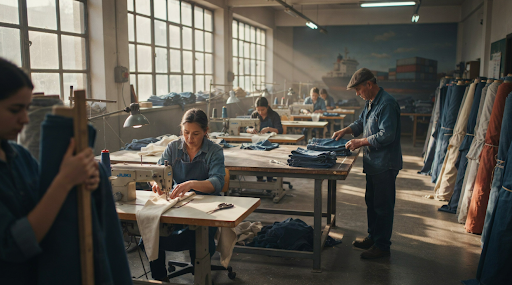
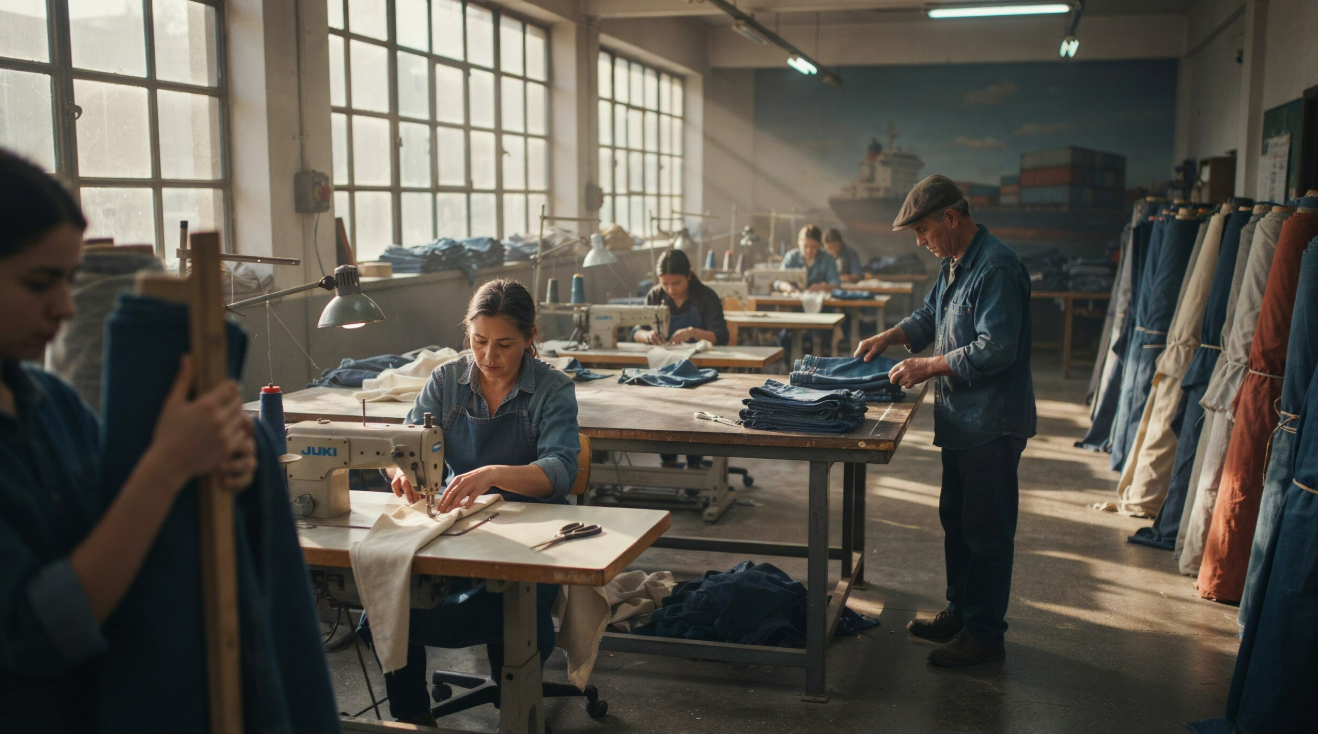
Massing pushed back on the word “misconception” when asked what he corrects most often. “I don’t know if its a misconception or if it’s just something that they are not necessarily aware of,” he said. “I think that when it comes down to it, whether you make goods overseas or domestically, they still run through the same processes, its just that you get to be in the kitchen where its made, when you are manufacturing domestically. The costs can be a shock but you have much more ethical approach and more care put into the stitch.”
A brand walking in expecting a pitch on why domestic manufacturing is fundamentally different gets something closer to an explanation of proximity instead. The steps are largely the ones already happening overseas: pattern development, cutting, sewing, finishing. What changes is that a domestic brand can walk the floor and watch each one happen, which is also why the invoice tends to land harder than the brand expected going in.
Conversations Change With the Budget
What does shift with company size is scale and framing. “The budgets are quite different, and the Fortune 100 company may think about sales differently when opening a division in clothing as a new revenue stream,” Massing said. “My approach for customer acquisition is the same, but with larger companies I need to make sure that my supply chain of raw materials has the ability to scale quickly.”
An emerging brand needs a sampling process that moves fast on a small run. A Fortune 100 division needs the same development discipline, plus a raw material pipeline that won’t buckle if the first order is ten times larger than anything Massing’s smaller clients place. Scaling the relationship is a supply-chain problem before it’s a design one: fabric mills and trim vendors have to be lined up to handle volume the brand hasn’t ordered yet, not just the volume it’s ordering now.
Tariffs Repeated an Old Wake-Up Call
Massing doesn’t credit tariffs with driving the shift toward domestic conversations so much as reinforcing a lesson brands had already half-learned. “The role I saw tariffs play was that it woke people up, the same way COVID did, when they realize that their business revolves around a supply chain that they don’t control and, depending on the economic climate, can change rapidly, rather than having stability stateside,” he said.
That reading tracks with what happened after 2020. Research from UNC’s Kenan-Flagler Business School found companies shifted purchasing away from riskier sourcing countries including China in the years following the pandemic, even as the total number of suppliers they used stayed roughly flat. Tariffs added a second, more expensive reminder of the same exposure: a supply chain that’s cheap and far away is still someone else’s supply chain, subject to someone else’s politics and currency.
None of that guarantees the calculation ends in domestic production. GlobalData apparel analyst Alice Price has argued the U.S. still lacks the specialization to compete on price for most categories.