





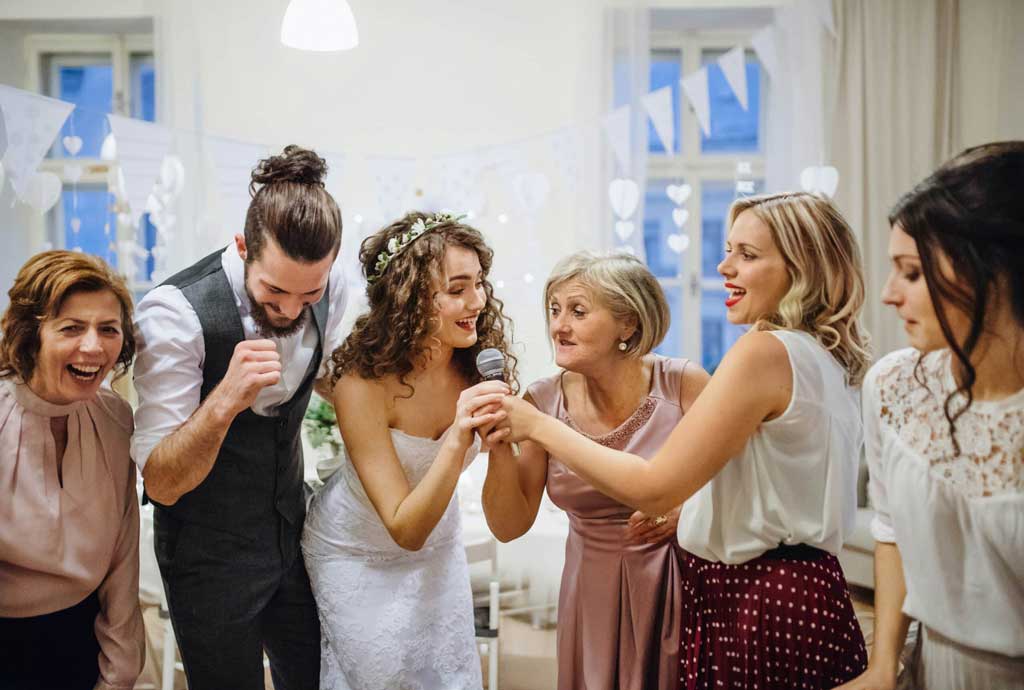
When planning wedding entertainment, many couples ask the same question: when should everything happen?
You might already know you want a DJ, a dance floor and karaoke, but getting the timing right is essential. Introduce entertainment too early, and guests may feel awkward. Wait until everyone is relaxed, and karaoke can become one of the highlights of the evening.
Most wedding receptions follow a natural rhythm. Understanding this makes it easier to introduce karaoke at the perfect moment, allowing the atmosphere to build gradually rather than forcing the party to start before guests are ready.
Early Evening: Let Guests Settle In
Once the wedding breakfast and speeches are finished, guests usually move into the evening reception space. Some head to the bar, others catch up with friends, and family members take the opportunity to mingle.
At this stage, conversation is usually the main focus. Background music creates a welcoming atmosphere without overpowering conversations or making guests feel they need to get onto the dance floor.
The goal is to give everyone time to relax after the formal part of the day. There is no need to rush into high-energy entertainment immediately.
When Evening Guests Arrive
Many couples invite additional friends and family to join the evening reception. As these guests arrive, the venue naturally becomes busier and the atmosphere starts to change.
There is usually more laughter, the bar gets busier, and people begin to feel that the celebration is properly underway.
However, most guests are still chatting and catching up rather than dancing. Keeping the music enjoyable and accessible helps maintain the atmosphere while everyone settles in.
The First Dance: Bringing Everyone Together
The first dance is often the moment when the evening reception begins to feel like a party.
Guests gather around the dance floor to watch the newlyweds, and once the first dance finishes, the DJ can encourage everyone to join in.
Initially, it might be a few confident friends or family members who get things moving. After a couple of songs, more guests usually join them, and the dance floor gradually fills.
This is an important transition. Guests start feeling more comfortable, conversations become livelier, and the formal atmosphere of the earlier reception gives way to something more relaxed.
Let the Dance Floor Warm Up
Allowing the dance floor to build naturally before introducing karaoke is often a good approach.
During this time, guests can enjoy the music, dance with friends and grab drinks between songs. Even those who prefer not to dance can enjoy the atmosphere from the sidelines.
After around an hour of dancing, many guests will feel more confident and ready to participate in something different.
That is when karaoke can work particularly well.
Introducing Karaoke at the Right Moment
Karaoke is generally most effective once guests have relaxed and the party is underway.
Introducing it too early can leave the microphone sitting unused, as people may be reluctant to sing in front of a room that is still quiet. Later in the evening, that initial hesitation often disappears.
The first singer is usually the hardest to find. It might be a confident friend of the couple, a member of the wedding party, or a group willing to sing together.
Once the first performance gets a positive reaction, others often become more enthusiastic about joining in.
The key is to make karaoke feel like a natural extension of the celebration, rather than an activity guests are expected to participate in.
For couples considering hire karaoke for their wedding, thinking about the timing beforehand can help make the experience enjoyable for everyone.
Wedding Karaoke Songs Everyone Knows
The most successful wedding karaoke songs are usually familiar, upbeat and easy for a crowd to sing along with.
Popular choices include:
- Dancing Queen – ABBA
- Livin’ on a Prayer – Bon Jovi
- Take Me Home, Country Roads – John Denver
- Don’t Stop Me Now – Queen
- I’m Gonna Be (500 Miles) – The Proclaimers
These songs work because guests recognise them immediately. Even people who do not want to sing often join in with the chorus from the dance floor or their tables.
Choosing a mixture of classics, party anthems and songs that appeal to different generations helps ensure everyone has an opportunity to get involved.
Can Karaoke and Dancing Work Together?
One common concern is whether karaoke will interrupt the dancing or empty the dance floor.
In practice, the two can complement each other. Guests might gather around to enjoy a performance, sing along with a friend and then return to dancing when the next song starts.
Others may prefer to watch, chat or enjoy the entertainment from the sidelines.
This flexibility helps keep the reception feeling lively without making the evening seem overly structured. Karaoke becomes another way for guests to participate rather than a replacement for the DJ or dance floor.
Later in the Evening: Making Memories
As the evening progresses, guests often become more confident and spontaneous.
Friends who were hesitant to sing earlier might take the microphone together, while groups of relatives join in with songs they remember from years ago.
Sometimes the most memorable moments come from an unexpected performance or a room full of guests singing a chorus together.
These experiences are rarely about perfect vocals. They are about shared laughter, familiar music and people enjoying themselves together.
Giving karaoke enough time to develop naturally can help create those moments without putting anyone under pressure.
Why Karaoke Timing Matters
Successful wedding karaoke is less about singing ability and more about atmosphere.
When guests feel comfortable with one another, they are more likely to participate, encourage their friends and enjoy the experience. Introduced too early, karaoke can feel like a performance in front of an unfamiliar audience. Introduced once the party is underway, it becomes part of the celebration.
Every wedding reception is different, so the timing should suit the couple, the venue and the guests. Karaoke does not necessarily need to follow a rigid schedule, and it can work alongside a DJ throughout the evening.
Final Thoughts
A typical wedding reception builds gradually. Guests arrive and catch up, the first dance brings everyone together, and the dance floor warms up before karaoke takes centre stage.
Allowing guests time to relax before introducing the microphone often creates a more natural and enjoyable experience.
Ultimately, the best wedding karaoke moments happen when people feel comfortable enough to join in without worrying about how they sound.
It is not about delivering a perfect performance. It is about bringing people together, creating plenty of laughter and giving everyone another reason to remember the night.