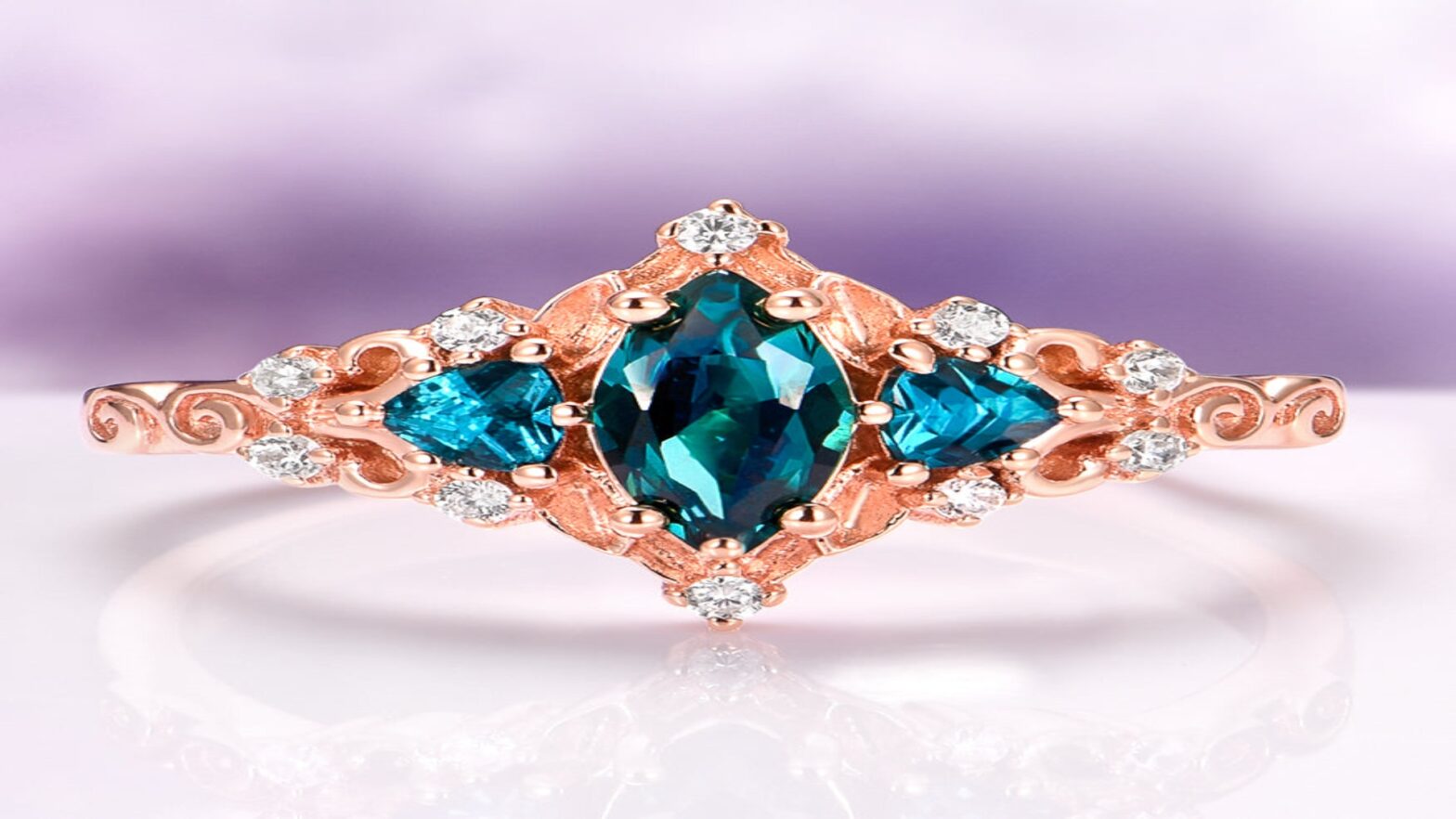




A jeweller’s tray can change your mind in minutes. The oval solitaire you have admired online may feel different on your hand, while an emerald-cut ring you barely noticed becomes the one you keep trying on.
An engagement ring appointment lets you explore what photographs leave out: the curve of the band, the setting’s height and the outline of the claws. It should also establish how closely the sample represents the ring you’ll receive.
Prepare for your engagement ring consultation
Choose a handful of reference images and identify what appeals in each: the proportions of one oval, the plain band of another ring or the warm yellow gold in a third. Those details give the consultant a useful starting point.
If you’re considering rings set with lab created diamonds, use your shortlist to decide which setting details you’d like to explore in person. Lily Arkwright offers solitaire and halo designs, with showroom and virtual consultations available to discuss your preferences.
Send your shortlist ahead and check which designs and stone sizes will be available. Give a budget for the complete ring, including personalisation, and mention any planned proposal date so the jeweller can explain what’s realistic.
Understand engagement ring samples before ordering
Establish what you’re trying on: a finished ring for sale, a sample setting or a close alternative to your proposed design. Check whether its stone type, dimensions, metal and band width match the ring you would order.
A different stone can help you assess the setting but won’t show how your selected diamond will look. Changes to stone size or band width can also alter the overall proportions.
Ask: “What will be different between this ring and the one on my quote?” Before you order, the consultant should explain how the finished ring will differ from the sample and help you picture those changes.
Explore engagement ring craftsmanship and personalisation
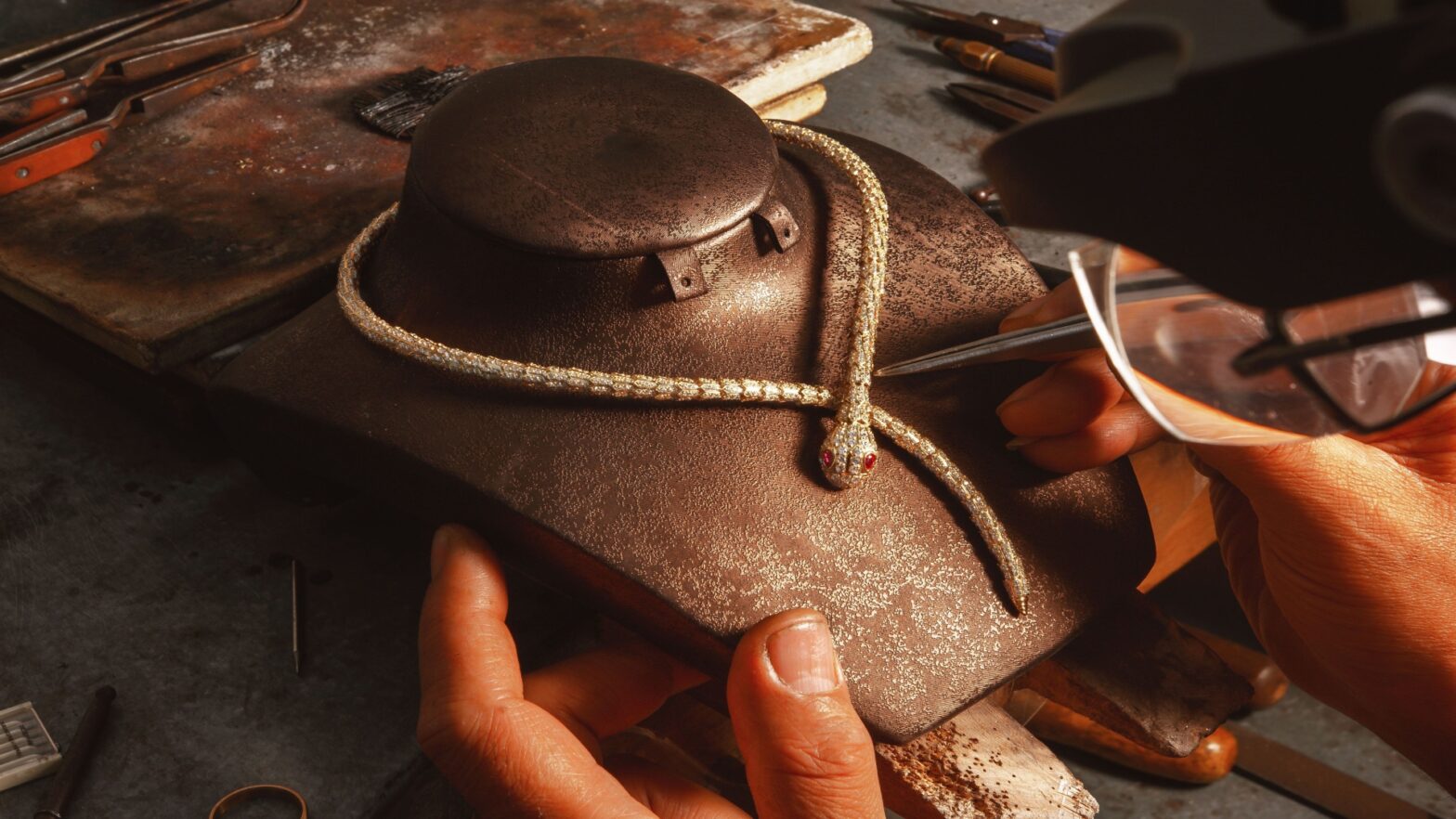
Once you have found a setting you love, use the consultation to explore its finer details. Would you prefer more rounded claws, a band that tapers towards the stone or an engraving inside? Ask which changes are available for that design and how they would affect the ring you have just tried.
A photograph of a similar finished piece can help you picture a change. If drawings or models are available, ask what they can show and what will only become apparent in the finished ring. Ask where the ring will be made and which stages of setting and finishing happen there.
Establish whether your request is an option within the design or requires a separate bespoke commission. Agree what you can review, when your approval is needed and how the changes affect the price and completion date.
Compare diamonds in different lighting
GIA recommends viewing diamonds in different lighting conditions because their appearance changes with the light around them.
With the consultant’s help, compare the same stones in softer light and daylight where available. Move your hand gently and notice the pattern of bright and dark areas, giving each ring the same chance to catch your eye.
If photographs are allowed, take a full-hand image and side view of each finalist in the same position. Save the design name beside each image, along with any differences between the sample and your order.
Check engagement ring setting height and comfort
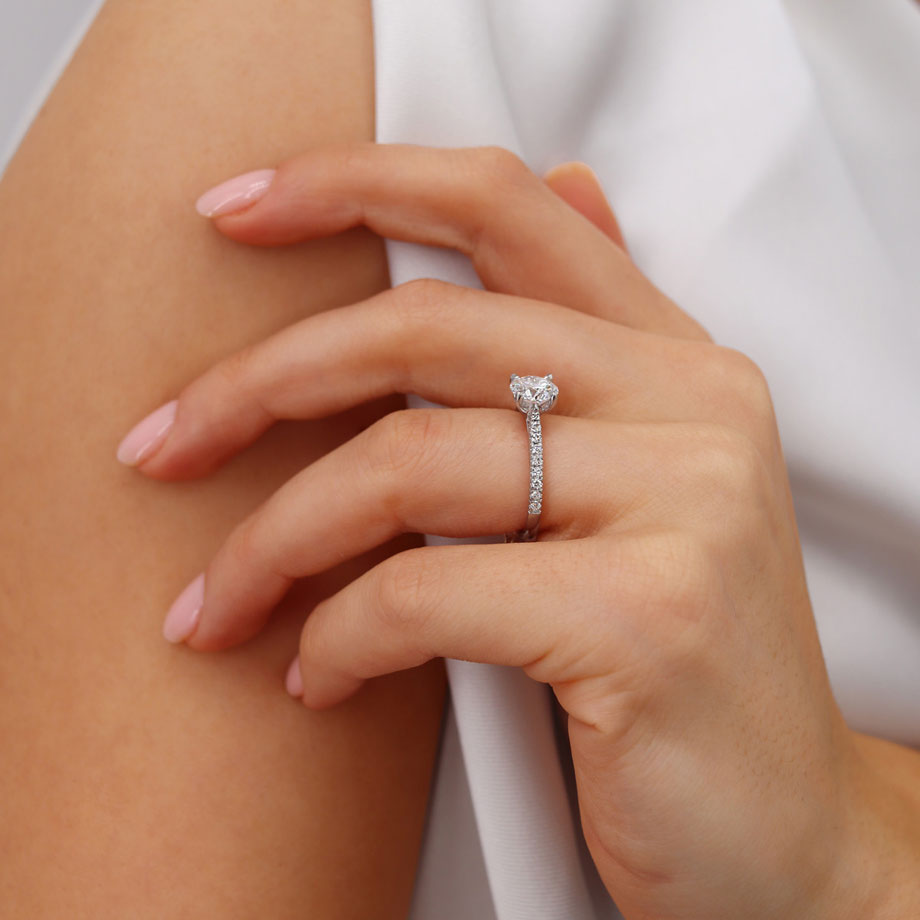
Turn your hand sideways to see how the diamond and its supporting metalwork sit above your finger.
Spend a few minutes with each finalist on. Let your fingers rest together and hold your phone normally. Notice pressure against neighbouring fingers or a tendency for the ring to turn. If the sample is loose, ask what the correct size would change.
Look at the finishing, too. Are the claws visually balanced? Do the edges feel smooth against your skin? Have the consultant show you the underside of the setting and explain how it supports the stone.
Compare nearby band widths: trying a 2mm band beside a 3mm band, for instance, makes the difference tangible. Discuss how your preferred width works with the chosen setting.
Try a wedding band alongside the engagement ring
If you plan to wear both on the same finger, try engagement rings and wedding bands together before choosing the engagement ring.
Place a straight band beside your preferred ring, then a shaped version if appropriate. Look from above and the side. Decide whether you like a gap or a close pairing, and have the jeweller check their points of contact.
Their combined width matters when assessing ring size, so have the fit checked for the pair you intend to wear. Trying them together doesn’t commit you to buying the wedding band at that appointment.
What to confirm before ordering your engagement ring
Before paying a deposit, check that the written quote records the design, metal, ring size, band width and changes from the sample. It should distinguish the centre diamond’s weight from any total carat weight that includes smaller stones.
Identify the selected diamond and its grading report, or agree how and when that choice will be made. Confirm the complete price, expected completion date and applicable resizing and return terms.
The specification should identify a lab-grown diamond as such. Keep the agreed design changes and approval stages with the quote, so the documents describe the ring you’ve discussed.
A second appointment can be very focused: compare two band widths, resolve the wedding-band fit or inspect the selected diamond. Leave knowing exactly what the next decision is, and what you need to see to make it.