






There is a particular kind of polish that people notice without being able to name. It is rarely the watch or the handbag. More often it is the smile: clean, even, a shade or two brighter than it was, and still unmistakably the person’s own teeth. Professional teeth whitening is one of the simplest ways to get there, and also one of the most misunderstood.
The market is crowded with strips, powders, LED gadgets and salon “whitening bars”. Most of them promise the same thing. Very few of them can legally deliver it, and some of them do real harm along the way. For anyone considering whitening before a wedding, a milestone birthday or the festive season, it is worth understanding what the treatment actually is.
Why teeth darken in the first place
Teeth change colour for two broad reasons. Surface staining builds up from coffee, tea, red wine and smoking. Deeper discolouration comes from within the tooth: the natural yellowing of the inner dentine with age, older fillings, and occasionally a tooth that has darkened after injury or root canal treatment.
Surface stain can usually be removed by a thorough professional clean. Deeper colour cannot. That is where whitening comes in. A peroxide gel passes through the enamel and lightens the colour of the tooth itself, rather than polishing the outside.
What the law says, and why it matters
In the UK, tooth whitening is legally a dental procedure. Products containing more than 0.1% hydrogen peroxide may only be supplied by, or on the prescription of, a registered dental professional. The maximum is 6%, the first application must be carried out or supervised by a dentist, and treatment is not permitted for anyone under 18.
In practice, this means the strong gels sold by salons, pop-up “whitening bars” and many online sellers sit outside the law. The General Dental Council has taken action against people offering illegal whitening. Beyond legality, unsupervised whitening carries real risks: gum burns, sensitivity, and whitening teeth that have untreated decay or leaking fillings.
The quiet luxury, in other words, is not a stronger gel. It is supervision.
What a properly planned treatment looks like
An examination first. A dentist checks that the teeth and gums are healthy before any whitening begins. Decay, gum inflammation or worn enamel need attention first. This is also when existing crowns, veneers and fillings are noted: they will not change colour, and a good plan accounts for that rather than leaving the patient surprised.
Custom trays, not one-size-fits-all. For take-home whitening, the teeth are scanned so that trays fit precisely. A close fit keeps the gel on the teeth and off the gums.
The right system for the patient. Different systems suit different teeth and different sensitivity levels. The dentist chooses the gel and the strength, and sets how long and how often it is worn.
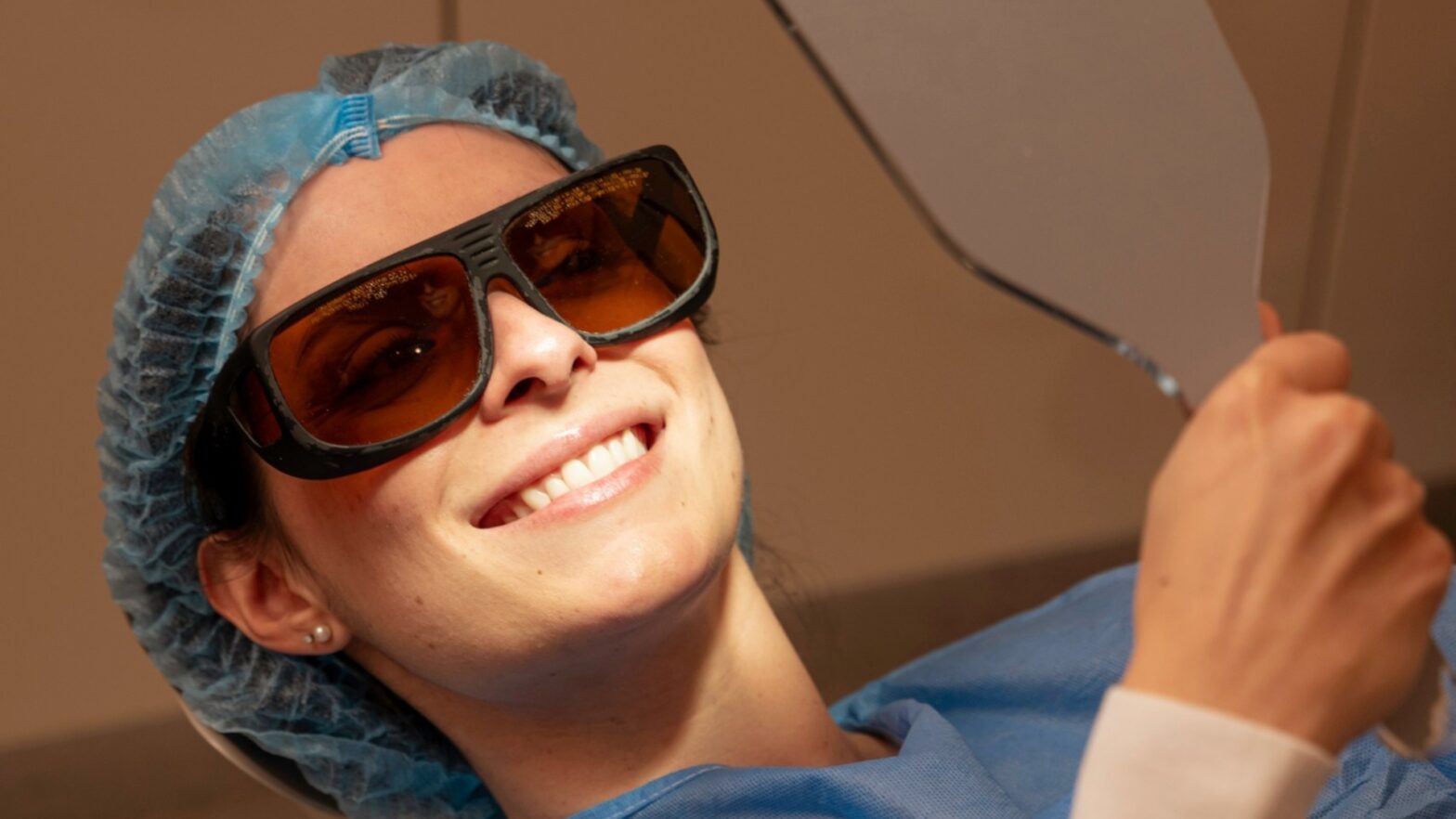
In-chair, take-home, or both. In-chair whitening gives a head start in a single appointment. Take-home trays continue the work gradually over days to a couple of weeks. A combination often gives the most even, stable result.
What to expect, honestly
Most people see a clear, natural-looking change. The aim is a brighter version of the person’s own teeth, not a uniform bathroom-tile white. Results vary between individuals and depend on the starting colour and the cause of the discolouration.
Some temporary sensitivity during treatment is common. It usually settles within a few days of finishing, and a dentist can adjust the strength or wear time to manage it. Results typically last one to three years, depending on diet, smoking and how often the trays are used for top-ups.
Whitening also has its limits. A single dark, root-treated tooth often needs a different approach (internal whitening from inside the tooth). Grey banding from certain antibiotics, or very thin enamel, may respond less predictably. A good dentist will say so before treatment starts, not after.
Choosing where to have it done
Look for a registered dentist who examines your teeth first, explains which system they recommend and why, and puts the full price in writing before you commit. Be cautious of anyone offering whitening without an examination, or promising a specific number of shades.
At Dental & Wellness London, a private clinic on Essex Road in Islington, whitening is planned and supervised by Dr Vishal Patel, BDS, MSc Aesthetic & Restorative Dentistry (GDC 103127). The clinic uses Opalescence, Enlighten and Philips Zoom, choosing the system to suit each patient’s teeth and sensitivity. Every whitening plan starts with a dental examination (£65), so that only a healthy mouth is treated. Take-home whitening with custom trays is £450, and in-chair whitening combined with take-home trays is £780. Internal whitening for a single discoloured root-treated tooth is £495. The clinic was founded in 2009.
Questions worth asking at the consultation
What is causing the discolouration? Surface stain, age-related yellowing and a single darkened tooth each need a different approach. The answer shapes the plan.
Which system will you use, and why? A clear answer, matched to your teeth and sensitivity, is a good sign.
What will happen to my existing crowns, veneers or fillings? They will not whiten. Ask whether any would need replacing to match, and what that would cost.
How will you manage sensitivity? Lower strengths, shorter wear times and desensitising products are all options. The plan should account for them from the start.
What does maintenance look like? Occasional top-ups with the same trays are usually all that is needed. Ask how often, and how much gel is included.
Timing it well
For an event, start at least three to four weeks ahead. That leaves time for the examination, any cleaning or small repairs, the whitening itself, and a few days for any sensitivity to settle. If you plan to replace older fillings or crowns at the front, whiten first: new restorations can then be matched to the brighter shade.
The understated result
The best whitening rarely gets noticed as whitening. People simply say you look well. That is the point: a careful, supervised treatment that brightens the smile without changing who it belongs to.